What’s new

Learn about the latest product features and improvements.

  • Speaker timeline

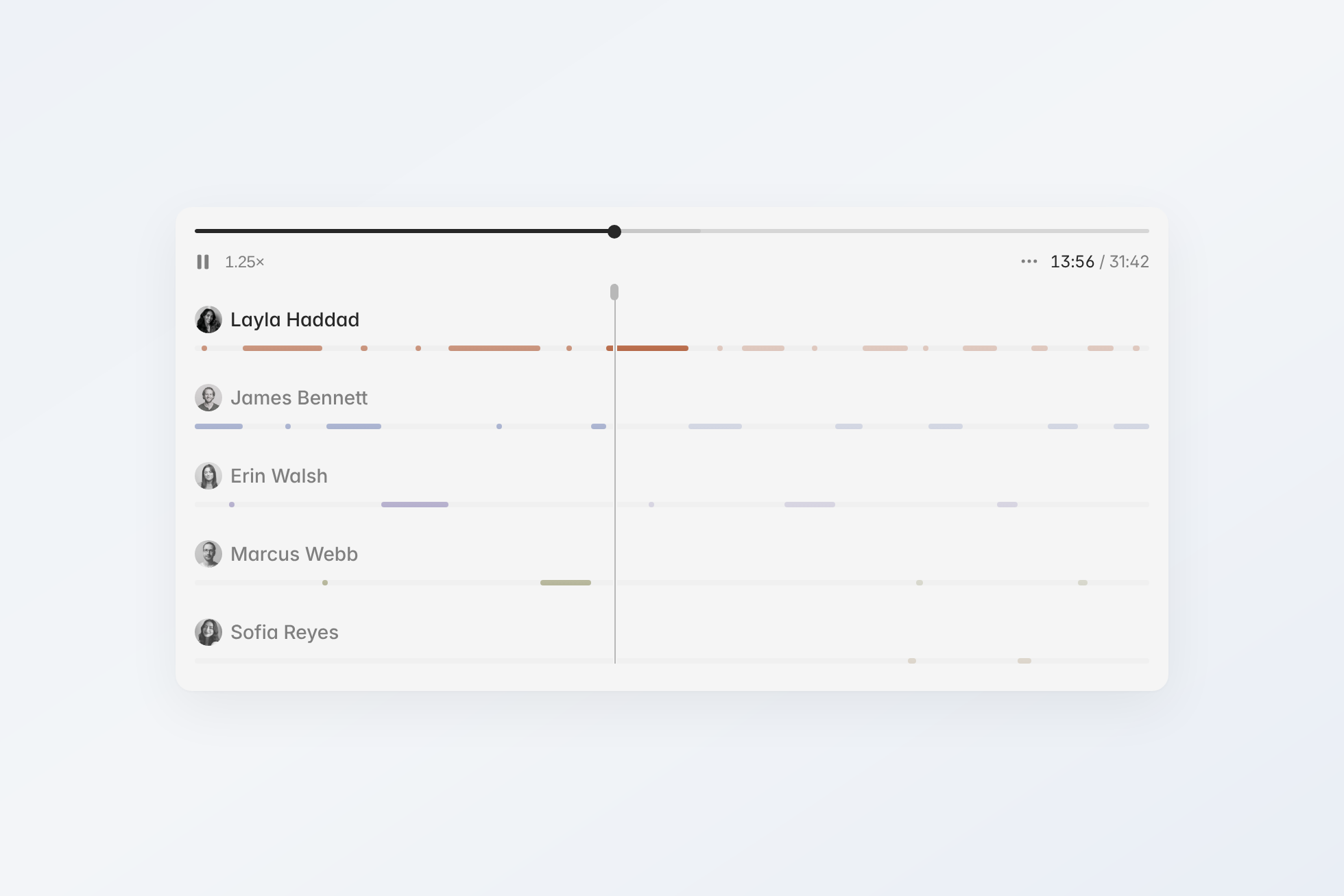
    You can now see who spoke when in a meeting. Under the recording, each speaker gets a row with bars marking every time they talked, ordered by who spoke most. Click a bar to jump to that moment, or drag the playhead to scrub through the conversation.

    Skip straight to the customer's answer on a sales call, or step through the candidate's answers in an interview. You can also tell at a glance who did most of the talking.

  • Folders

    Today we're releasing folders. A folder keeps related meetings together and shares them with the people you add. Put your customer calls in a Customers folder, add the sales team, and everyone on it sees every meeting in the folder, including the ones they weren't invited to.

    Add meetings yourself by dragging them onto a folder in the sidebar, selecting Add to folder at the top of a meeting, or selecting several meetings at once. Or set up rules, and Circleback adds matching meetings as they finish.

    Add meetings automatically

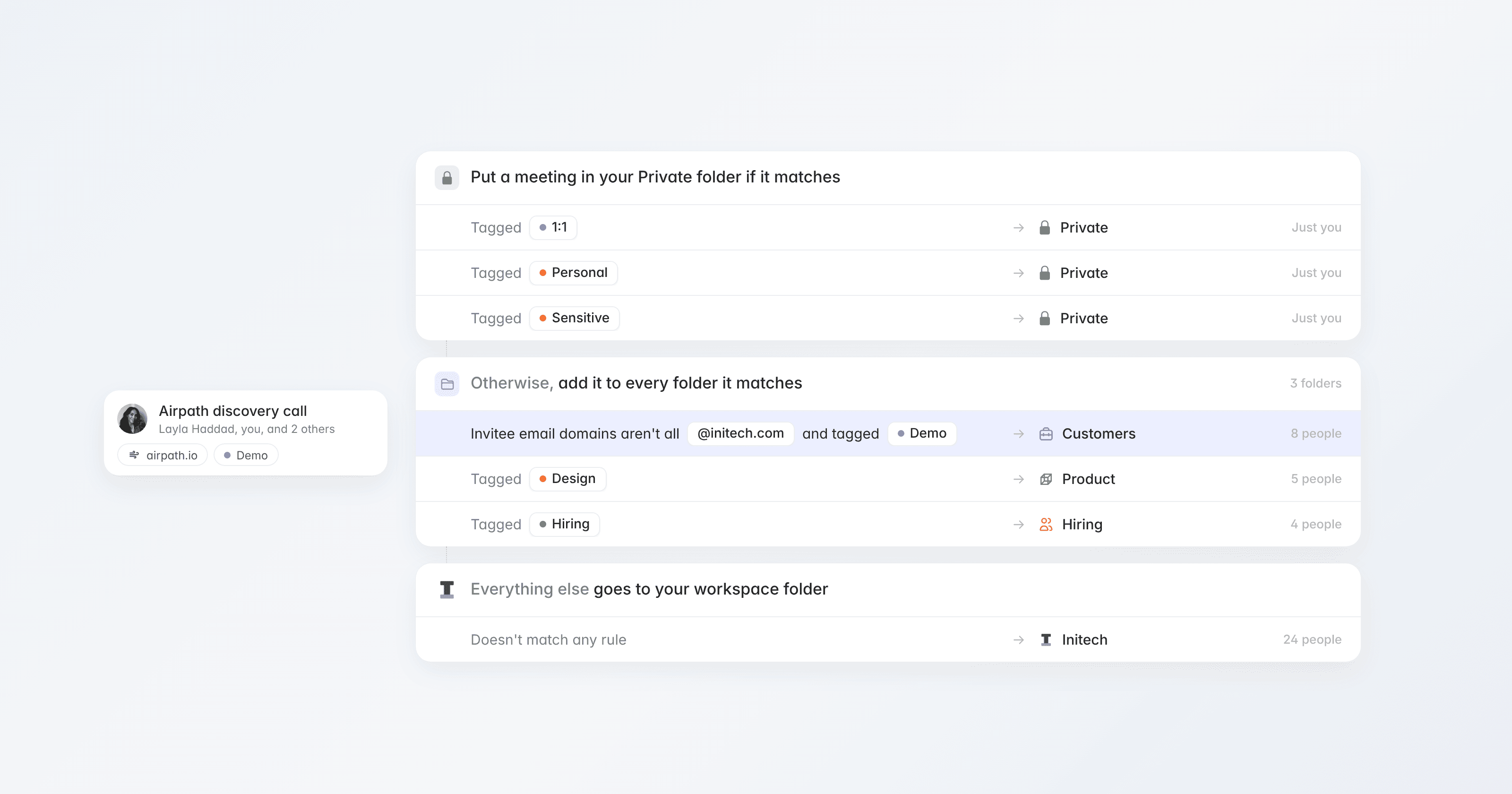
    A folder's rules can add every meeting, or only meetings that match conditions like a tag, a word in the meeting name, or a participant's email domain. Choose whose meetings the rules add: everyone in the folder, or only specific people. From then on, new meetings that match show up in the folder as soon as they finish, and everyone in it can see them.

    This replaces sharing through automations. If you had automations that shared meetings, they've become folders that share the same meetings with the same people.
    Choose who sees what

    Add people, teams, or your whole workspace, and choose their access. People outside your workspace can be added by email. A folder can be open to your workspace, so anyone can find it and ask to join, or hidden, so only the people in the folder and workspace admins can see it.

    Keep some meetings private

    Meetings that aren't in a folder stay in Private, where only you and the people you've shared them with can see them. Privacy rules keep matching meetings out of folders, whatever a folder's rules say. By default, meetings tagged 1:1, Personal, or Sensitive stay private. Workspace admins set the default rules for everyone, and each person can always add their own from Settings → Sharing.

    Folders are also available in the Circleback API, MCP, and CLI, and you can ask Circleback to create a folder, share it, or add meetings to it.

    Get started by selecting + next to Folders in the sidebar, or read more in the docs.

  • Start recording with the Action button on Apple Watch Ultra

    If you have an Apple Watch Ultra, you can now start recording with the Action button. One press opens Circleback and starts a recording, just like tapping the Circleback complication.

    To set it up, update to the latest version of the iOS app. Then go to Settings → Action Button on your watch, set Action to Control, and choose Circleback → Record.

  • Ask Circleback about Plain

    You can now connect Plain to Circleback and ask questions about your support conversations. Catch up on a customer's open issues before a call, or find out whether something raised in a meeting has already come up in support.

    Get started by connecting Plain from Settings → Connected accounts and asking Circleback something like:

    • What has Initech contacted support about since our last call?
    • Has anyone else reported the issue from today's demo?
    • Which support threads are still open for the customer I'm meeting tomorrow?
  • Ask Circleback to search the web

    Circleback can now search the web to answer your questions. When an answer needs information that isn’t in your meetings, emails, or connected apps, Circleback looks it up and uses what it finds.

    Circleback already knows what was said in your conversations. The web fills in what wasn’t, so you can ask things like:

    • Who am I meeting with tomorrow, and what does their company do?
    • Initech mentioned a competitor on today’s call. What does that company do?
    • Has anything changed at Initech since we last spoke?
    • Draft a follow-up to Sam with a link to the report he mentioned.

    Answers show the pages Circleback used, so you can check where something came from.

    Available today everywhere you ask Circleback: web, desktop, mobile, and Slack.

  • Ask Circleback to update meetings

    You can now ask Circleback to update meetings, action items, and tags for you. Instead of only answering questions about your meetings, it can act on them.

    Ask Circleback to share yesterday's customer interviews with the Product team. Have it add questions to your notes for tomorrow's board meeting, or mark your action items from this morning's standup done.

    Here’s everything it can now do:

    • Create, edit, assign, complete, and delete action items
    • Create, edit, and delete tags, and add or remove them from meetings
    • Share meetings with people, teams, your workspace, or a link
    • Rename meetings and edit their notes
    • Add your own notes and tags to upcoming meetings
  • Update Circleback with MCP, CLI, and API

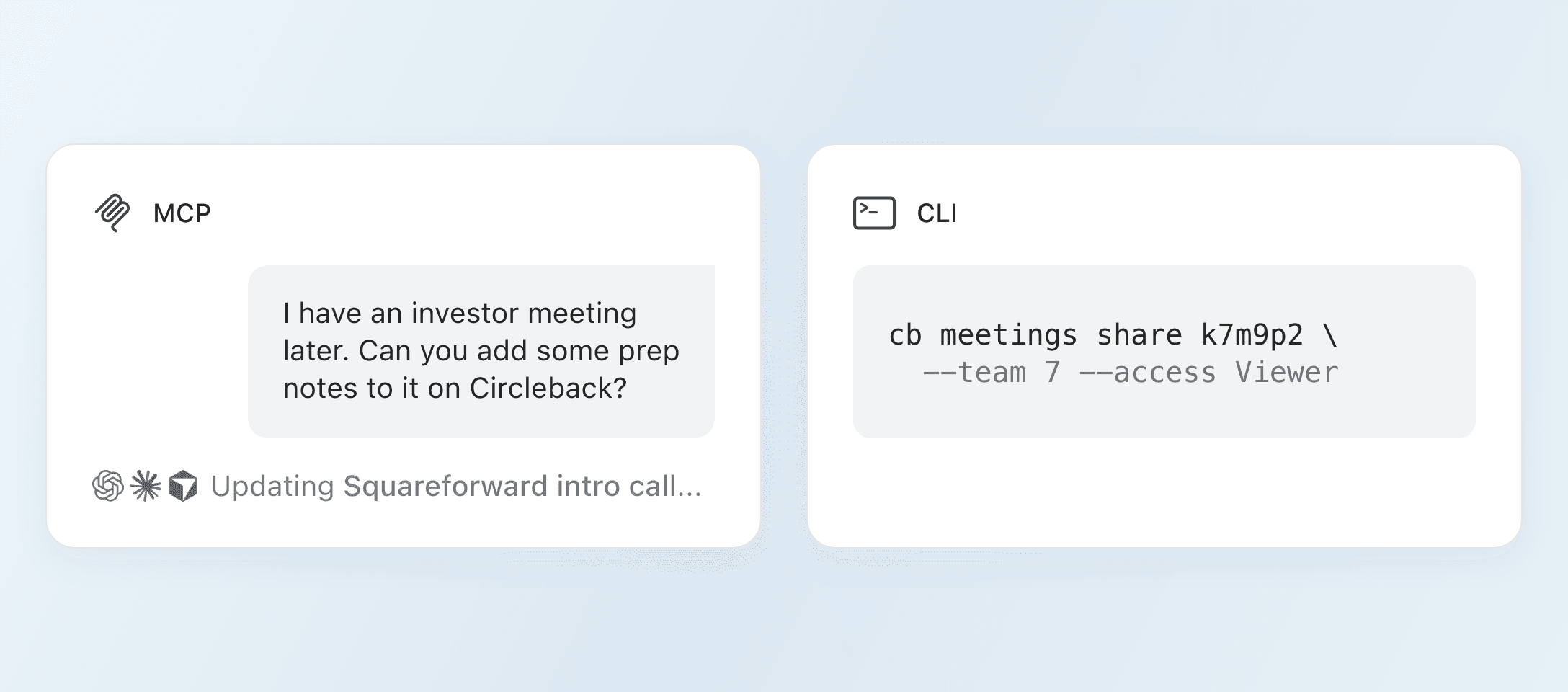
    You can now make changes in Circleback through MCP, the CLI, and the API. Create and assign action items, mark them done, organize meetings with tags, edit notes, and manage meeting access from the tools you already use.

    Ask your AI assistant to review your open action items and mark the ones you’ve finished as done. Have it save prep for tomorrow’s call to your private notes, or tag this week’s customer calls and share them with your team. Changes are saved directly in Circleback.

    To enable write access, reconnect Circleback in your AI app. For the CLI, update to the latest version, run cb auth logout, then run cb auth login. For the API, use a key with read and write access from Settings → API keys.

  • Filter meetings by date

    You can now filter meetings by date. Select Filter → Date on the meetings page, then pick a single day or a range of dates to see only meetings from that period.

    This makes it easy to track down a meeting when you remember when it happened but not what it was called, or to pull up every conversation from a particular week, like an offsite or a customer trip. Date filters can be combined with participants, companies, and tags, and saved to a view like any other filter.

  • Set your workspace image

    Admins can now update the workspace image. Use your company's logo, and your team and the people you meet with will see it everywhere your workspace and company show up in Circleback.

    Go to Settings → General (under Workspace) to update the image.

  • Single sign-on

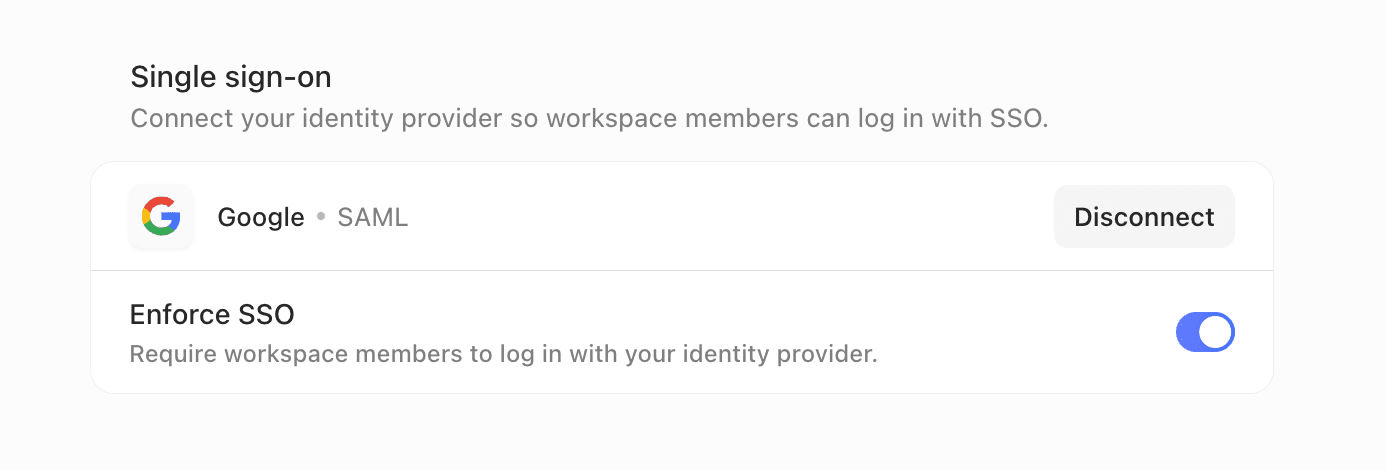
    You can now connect your identity provider to Circleback so workspace members can log in with SSO. Circleback supports SAML and OIDC, so it works with Okta, Google Workspace, Microsoft Entra ID, and any other provider that supports either standard.

    Once connected, workspace admins can enforce SSO, which disables every other way of logging in. Your identity provider decides who can access Circleback.

    Circleback also works with SCIM, so your identity provider can manage accounts for you. When someone joins your company, they get access to Circleback automatically. When they leave, they're deactivated in your workspace.

    Workspace admins can set up SSO from Settings → Workspace → General.

  • Switch to invoice billing

    You can now pay for Circleback by invoice instead of automatic payments. At each renewal, we'll email you an invoice to pay within 30 days, rather than charging your payment method. This is useful if your company pays vendors through accounts payable.

    To switch, go to Settings → Billing, select ⋯ next to Payment method, and choose Switch to invoice billing. The change takes effect at the end of your current billing period.

    Once you're on invoice billing, you can add seats by invoice too.

  • Import meetings with the API

    You can now import meetings into Circleback with the API. Send a meeting's name, date, attendees, notes, transcript, and who it's shared with. Imported meetings work like any other meeting. You can search them and ask questions about them.

    This is useful for bringing in past meetings from other tools, so your full history lives in one place.

Earlier releases

Be in the conversation, not in your notes.

Unlimited meetings on the free plan.